

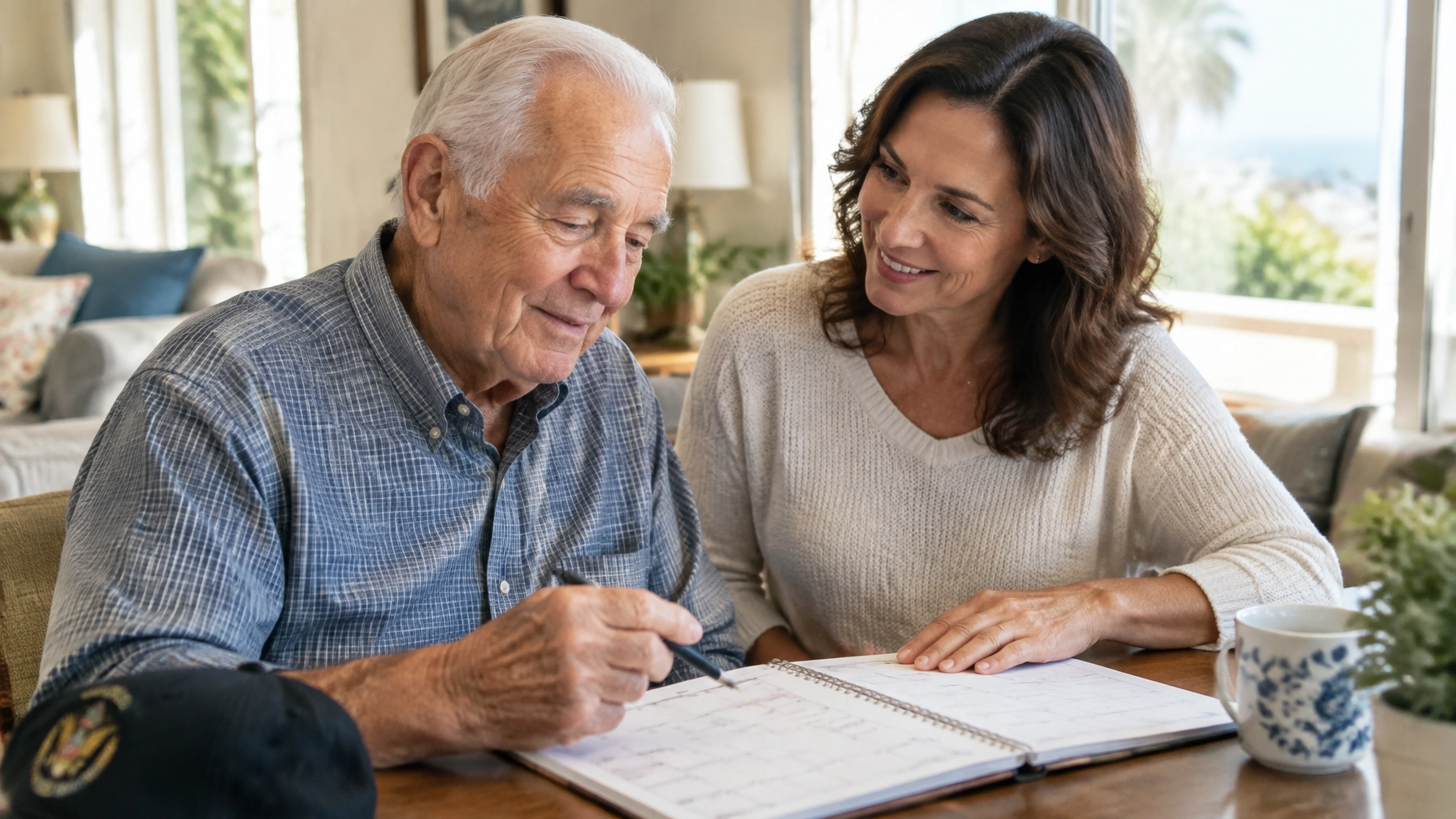
When a veteran or surviving spouse needs help with everyday activities, families often have questions about care costs and available benefits. VA Aid and Attendance may provide important financial support for eligible people who need help at home or in another care setting.
Understanding the benefit and completing an application can feel complicated. We’re here to explain the basics, outline common application steps, and show how in-home care may fit into your family’s plans.
What Is VA Aid and Attendance?
Aid and Attendance is an increased monthly payment added to the VA pension for eligible veterans and survivors who meet certain care or medical criteria. It is not a separate benefit that automatically pays for all care. The VA considers pension eligibility, income, net worth, and the person’s needs before deciding whether they qualify and what amount may be payable.
A veteran or surviving spouse may meet the Aid and Attendance medical criteria if at least one of the following applies:
- They need another person’s help with daily activities, such as bathing, dressing, eating, toileting, or transferring.
- They are bedridden, or spend a large part of the day in bed because of illness.
- They live in a nursing home because of the loss of mental or physical abilities related to a disability.
- They have severe visual impairment that meets the VA’s standards.
Aid and Attendance is different from the Housebound benefit. You can’t receive both Housebound benefits and Aid and Attendance at the same time. If you’re unsure which category may fit your loved one, the VA or an accredited veterans’ representative can explain the rules.
Who May Qualify?
Needing daily support is only one part of eligibility. A veteran generally must first qualify for a VA pension, and a surviving spouse must meet the applicable survivor pension requirements. Eligibility can depend on service history, age or disability, income, assets, and household circumstances.
Income and net-worth considerations
For the period December 1, 2025, through November 30, 2026, the VA net-worth limit is $163,699. The VA generally excludes a primary residence and a vehicle from its asset calculation, as well as basic household items. Other assets and income may count under VA rules, so each family’s financial picture should be reviewed carefully.
The VA also sets a Maximum Annual Pension Rate (MAPR). For the 2026 rate period:
- An eligible veteran with no dependents who qualifies for Aid and Attendance has a MAPR of $29,093.
- An eligible veteran with one dependent has a MAPR of $34,488.
These are maximum annual rates, not guaranteed payment amounts. The VA calculates a pension based on the applicable rate and countable income. Certain unreimbursed medical expenses, which may include qualifying in-home care costs, can reduce countable income under VA rules. Keep receipts, invoices, and records, and ask the VA or an accredited representative how an expense may be treated. Rates can change, so confirm the current figures when you apply.
For official details, review the VA’s Aid and Attendance and Housebound information and current Veterans Pension rates.
How to Apply for VA Aid and Attendance
The application process takes preparation, and the VA’s review can take time. Gathering information early can make the next steps more manageable.
1. Collect medical evidence
VA Form 21-2680, *Examination for Housebound Status or Permanent Need for Regular Aid and Attendance*, documents the person’s medical condition and need for assistance. A physician or other qualified medical professional completes the examination information. The form should clearly describe relevant limitations and the daily activities where help is needed.
If your loved one lives in a nursing home, the VA may also require VA Form 21-0779, *Request for Nursing Home Information in Connection with Claim for Aid and Attendance*.
2. Complete the pension application
The main application depends on who is applying:
- Veterans: VA Form 21P-527EZ, *Application for Veterans Pension*.
- Surviving spouses: VA Form 21P-534EZ, *Application for DIC, Survivors Pension, and/or Accrued Benefits*.
Check the current form instructions and include the medical evidence and supporting records requested for your situation. The VA forms page for Form 21-2680 provides the form and additional instructions.
3. Submit the application
You can apply online, send completed forms by mail, or bring information to a VA regional office. The VA’s current mailing instructions for pension claims list:
Department of Veterans Affairs
Pension Intake Center
P.O. Box 5365
Janesville, WI 53547-5365
Processing times vary. Keep a copy of what you submit, note the date, and respond promptly if the VA asks for more information. For advice about preparing or pursuing a claim, contact an accredited veterans’ service organization, claims agent, or attorney. CareBuilders at Home is not an accredited VA claims agent and does not file claims for families.
How In-Home Care May Fit
For many families, the practical question is how to support a loved one safely at home. If approved, Aid and Attendance funds may help with the cost of non-medical in-home care, depending on the household’s circumstances and the VA’s rules. The benefit is not a promise of coverage for a particular service, but it may be one part of a family’s plan for care expenses.
CareBuilders at Home provides non-medical home care that can be tailored to a veteran’s routines and preferences, including:
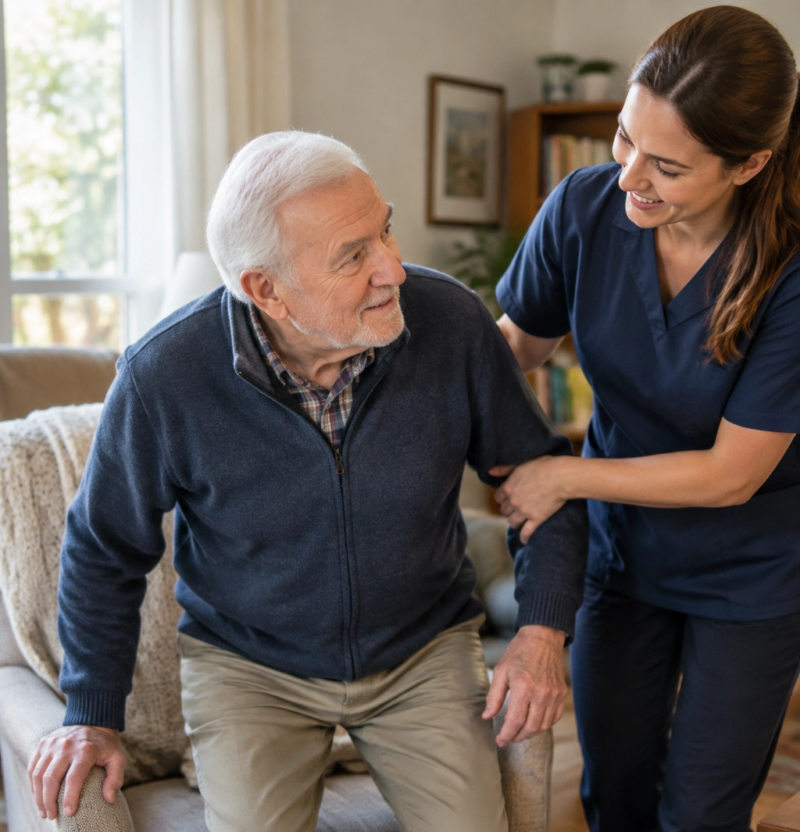
- Personal care: Help with bathing, dressing, grooming, and other daily activities.
- Companion care: Conversation, activities, and support with errands or appointments.
- Housekeeping and meals: Help keeping the home comfortable and preparing food.
- Transportation: Assistance getting to appointments, shopping, and essential errands.
- Around-the-clock care: Ongoing in-home support when a family needs more consistent assistance.
Learn more about our home care services, personal care services, and companion care services.

How CareBuilders at Home Can Help
Sorting through paperwork while arranging care can feel like a lot to manage. Our team can help families understand the general steps, make a list of information to gather, and coordinate with a veteran’s medical provider about the activities-of-daily-living documentation needed for VA Form 21-2680.
We can also talk with you about the type of non-medical assistance that may make everyday life easier, from a few visits for personal care or companionship to more consistent support. Our caregivers provide practical help while respecting your loved one’s dignity, independence, and preferences.
We serve families in Fullerton, Anaheim, Buena Park, and nearby communities. Care needs and benefit questions are individual, and we’ll help you understand your care options without pressure.
Start a Conversation About Care
VA Aid and Attendance may offer meaningful support for eligible veterans and surviving spouses, but the rules and application can take time to understand. You don’t have to plan home care on your own.
Call CareBuilders at Home of Fullerton at **657-888-0670** or contact our team online. We’re here to listen, answer questions about in-home care, and help your family consider a comfortable next step.