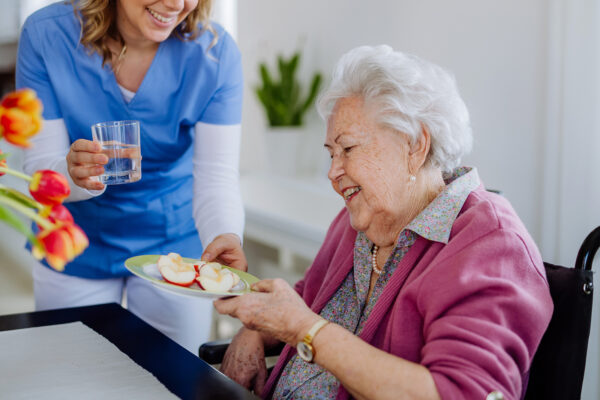


Let’s take the pressure off: healthy eating for seniors isn’t about gourmet recipes or kale every day. It’s about consistent nourishment and hydration that fuel energy, mood, and independence. Many older adults lose their thirst cues or feel less hungry, so dehydration and malnutrition creep in quietly. As someone who has to manage energy carefully with MS, I’m all about practical, doable choices, not food guilt.
Why hydration matters more than you think
Mild dehydration can cause dizziness, confusion, headaches, constipation, and falls. If your loved one seems “off,” start by asking how much they’ve had to drink. A simple rule of thumb for many adults is sipping water throughout the day until urine is light yellow. If plain water isn’t appealing, try herbal tea, diluted juice, or flavored water. Broth‑based soups count, too.
Make water easy to win.
Set out a favorite cup where it’s visible. Use a marked water bottle with hourly lines for gentle reminders. Offer a small drink with every transition: after waking, before medications, with snacks, and after a walk. If getting up at night is a concern, front‑load fluids earlier in the day.
Protein: the unsung hero
Protein helps maintain muscle and steadies blood sugar, which supports strength and balance. Encourage simple staples: eggs, yogurt, cottage cheese, tuna, chicken salad, beans, nut butters, or smoothies. If chewing is tough, think soft options like scrambled eggs, Greek yogurt, or blended soups.
Small, frequent meals beat giant plates.
Big meals can feel overwhelming. Aim for three modest meals plus two snacks. Keep easy “grab‑ables” ready: cheese sticks, crackers with peanut butter, cut fruit, hummus with soft pita, or a half sandwich; pair carbs with protein to avoid sugar crashes.
Flavor without the fuss
Taste changes with age. Brighten meals with herbs, lemon, garlic, and a drizzle of olive oil. If salt needs to be limited, experiment with spice blends. If dentures or dental pain make eating unpleasant, schedule a checkup; comfort matters.
Make the kitchen safer and simpler.
Store most‑used items between waist and shoulder height. Use an electric kettle or microwave instead of heavy pots on the stove. Choose dishes with handles, cups with lids, and non‑slip placemats. A caregiver can prepare ingredients, portion snacks, and keep the fridge organized so that good choices are the easiest ones.
Medication and appetite
Some medicines blunt appetite or cause nausea. Ask the doctor or pharmacist about timing and food pairings that make meds easier to tolerate. Keep a simple food and fluid log for a week to spot patterns.
Turn meals into moments.
Companionship boosts appetite. A shared table, even for 20 minutes, can make all the difference. Food is fuel, but it’s also comfort. I write about this in Let Your Cup Runneth Over, how daily rituals, like eating and connecting, can refill our cups in ways bigger than calories.
When to get extra help
If weight changes, dehydration, or missed meals are a pattern, bring in support. Our team can assist with grocery shopping, meal prep, hydration reminders, and gentle encouragement during mealtimes.
Bottom line
Small steps stack up. A glass of water here, a protein snack there, and suddenly energy is steadier, moods are brighter, and the risk of falls and hospital visits drops.
Want a meal‑and‑hydration reset?
Email marietta@carebuildersathome.com to ask about wellness check‑ins and our easy weekly meal prep add‑on.