

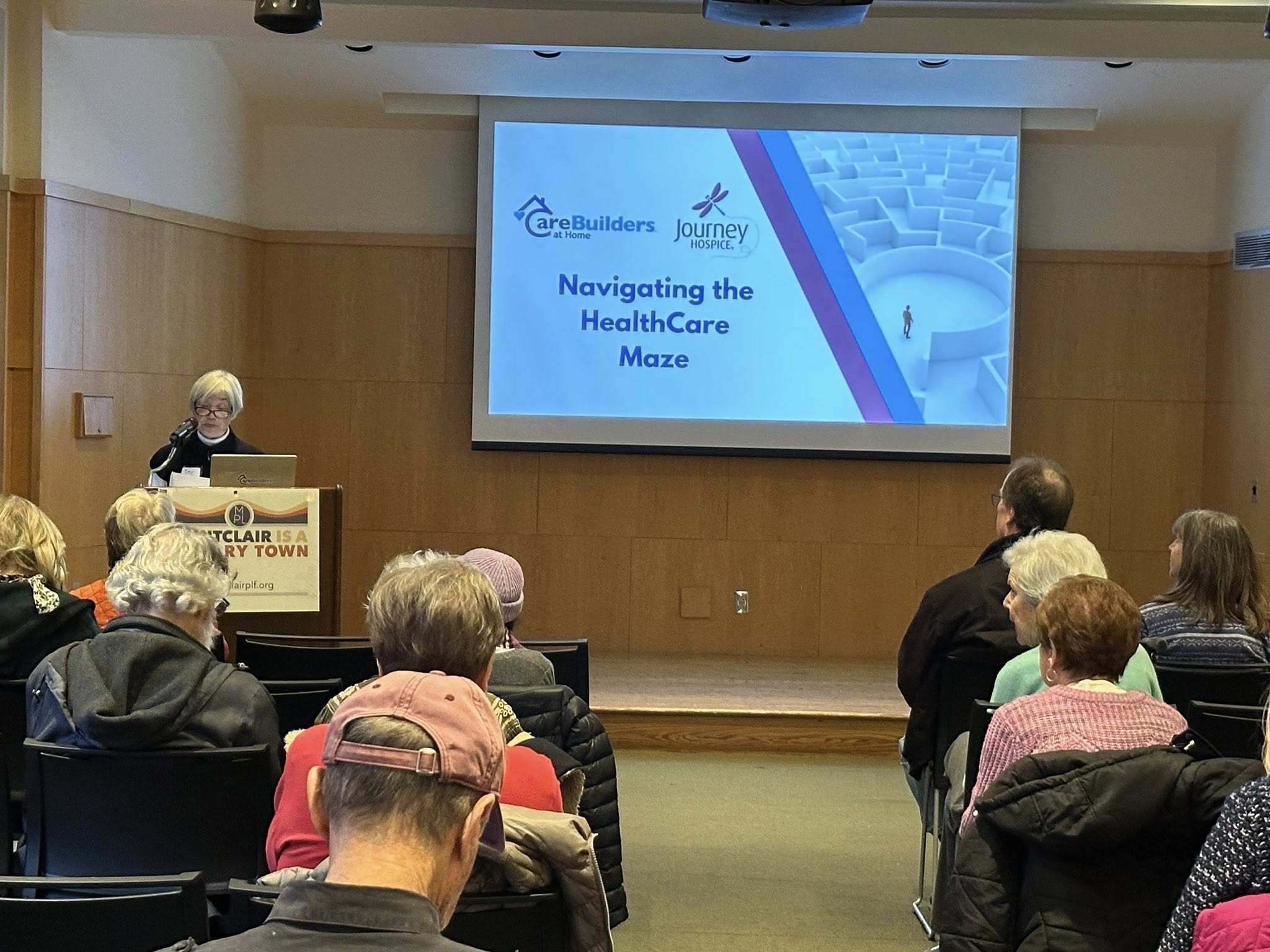
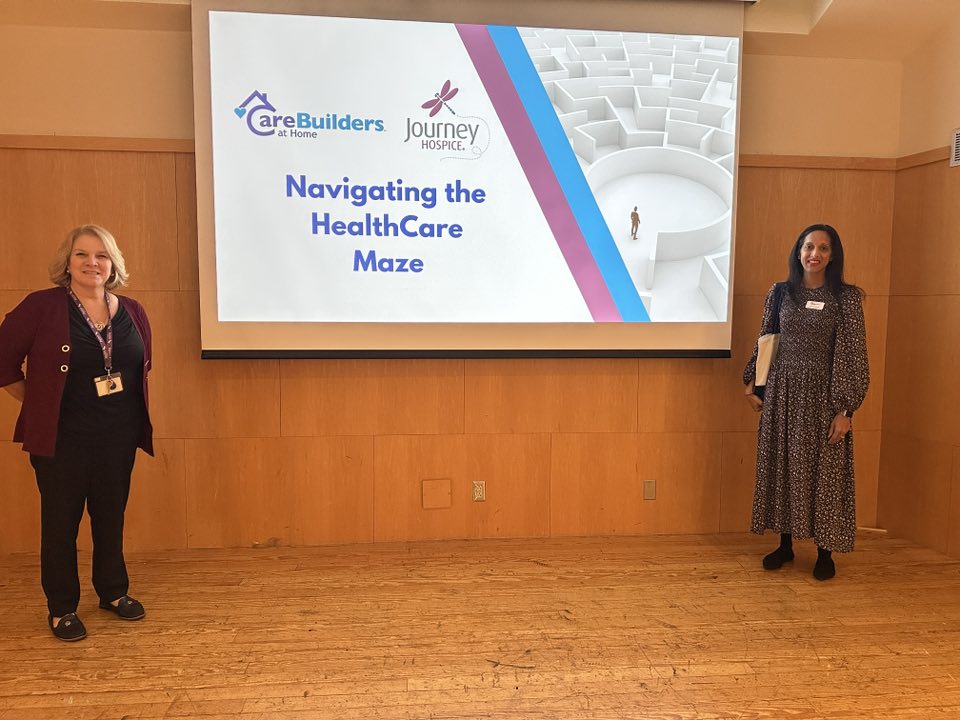
On November 15th, CareBuilders partnered with Journey Hospice to deliver an educational presentation for the Aging in Montclair group at the Montclair Public Library. The program, “Navigating the Healthcare Maze,” helped community members better understand the complex healthcare system and the many transitions older adults may face.
Our goal was to bring clarity to a process that often feels overwhelming for families. Using our joint presentation deck, we covered care settings, Medicare coverage, patient rights, hospice services, veterans benefits, and the steps families can take to ensure safer transitions home.
Understanding the Healthcare Maze
We opened with the key challenges families commonly experience:
- Multiple care settings and providers
- Confusing insurance rules
- Short discharge timelines
- Limited patient education
- Lack of continuity in care
- Stress and burnout for families
These factors create conditions where important details can be missed, which is why so many families benefit from guidance and hands-on support.
The Continuum of Care: From Hospital to Home
The presentation outlined the major care settings and the services provided at each stage, including:
- Hospitals and rehabilitation facilities
- Skilled Nursing Facilities
- Skilled Home Health (nursing, therapy, wound care, and other Medicare-covered services)
- Senior Living communities such as Independent Living, Assisted Living, and Memory Care
- Non-medical home care, which includes personal care, meal preparation, transportation, and companionship
- Hospice care, which focuses on comfort and quality of life for individuals with a prognosis of six months or less
We also clarified the differences between skilled medical services, which are typically covered by insurance, and non-medical home care, which helps seniors remain safe and independent at home.
What Medicare Covers – and What It Does Not
Attendees appreciated the clear breakdown of Medicare benefits:
Medicare Covers:
- Hospital care
- Skilled nursing (with eligibility)
- Skilled Home Health for homebound patients
- Hospice care
Medicare Does Not Cover:
- Long-term custodial care
- Home health aide support for everyday tasks
- Routine dental, vision, and hearing
- Cosmetic procedures
Understanding these limits helps families plan and avoid unexpected costs.
Traditional Medicare vs. Managed Medicare
We reviewed the differences between Traditional Medicare and Medicare Advantage (Managed Medicare), including premiums, provider networks, and added benefits. Participants were encouraged to speak with a qualified insurance professional to ensure alignment with their health needs and budget.
Patient Rights & Advance Care Planning
The discussion also covered essential topics such as:
- Patient rights during hospital stays
- The ability to appeal discharges
- Involving family or designated decision-makers
- Understanding living wills, healthcare proxies, and POLST forms
Having these documents in place ensures that individuals receive the care they want, even if they cannot speak for themselves.
Hospice Care: Comfort, Support, and Guidance
Journey Hospice provided an overview of hospice care, emphasizing that hospice prioritizes comfort, dignity, and emotional and spiritual support. Medicare covers hospice care at 100 percent for eligible individuals, including nursing, medications related to the terminal diagnosis, durable medical equipment, social work support, and counseling.
Veterans Benefits
Many attendees were surprised to learn about important benefits available to veterans, spouses, and surviving spouses:
- VA Health Care Services
- Home Health Aide support through the VA
- Aid & Attendance benefits to help pay for home care, assisted living, or nursing care
These programs offer essential financial relief and access to needed services.
Steps for Successful Transitions Home
We closed with practical tips families can use immediately:
- Participate actively in discharge planning
- Understand the recommended level of care
- Ask about Skilled Home Health
- Watch for warning signs that help is needed
- Use non-medical home care to prevent falls, missed medications, unsafe driving, and household accidents
- Keep medical records organized
- Attend all follow-up appointments
These steps significantly reduce the risk of hospital readmissions and help seniors remain safe at home.
Here to Support our Community
We were grateful for the opportunity to partner with Aging in Montclair and share this essential information with local residents. CareBuilders and Journey Hospice remain committed to supporting older adults and their families through every stage of the healthcare journey.
For more information, please call or text our office at (973) 908-6380 or email us at essex@carebuildersathome.com. We are happy to help.