


November is Alzheimer’s Disease Awareness Month. It is a meaningful time to learn more about memory loss, support family caregivers, and recognize the everyday challenges that can come with Alzheimer’s disease and other forms of dementia.
One of those challenges is sundowning.
If your loved one becomes more confused, restless, anxious, or upset in the late afternoon or evening, you are not alone. These changes can be difficult for the whole family. The good news is that simple adjustments, steady routines, and compassionate support can make dusk feel calmer and more predictable.
What Is Sundowning?
Sundowning is a pattern of increased confusion, agitation, anxiety, or restlessness that often appears later in the day. It may continue into the evening or nighttime.
Your loved one may:
- Pace around the home
- Ask repeatedly to “go home”
- Become anxious or suspicious
- Resist bathing, dressing, or dinner
- Call out or raise their voice
- Have trouble recognizing familiar people
- Become more fearful when the sun goes down
- Wake during the night or confuse daytime with nighttime
Sundowning is not a separate disease. It is a group of symptoms that may affect people living with Alzheimer’s disease or another form of dementia. Not everyone experiences it, and each person may have different patterns.
The Alzheimer’s Association’s guidance on sleep issues and sundowning and the National Institute on Aging’s information about sundowning can help you understand what you are seeing.
Why Does Late-Afternoon Agitation Happen?
Sundowning may be connected to changes in the brain’s internal body clock. Dementia can make it harder to tell the difference between day and night. By late afternoon, your loved one may also be tired from the day’s activities.
In Tampa, the change in light may happen quickly. Shadows lengthen across a room. A passing afternoon storm can darken the home. Glare from windows, unfamiliar reflections, and reduced visibility may all increase confusion.
Common triggers include:
- Fatigue: A busy day may leave your loved one overwhelmed.
- Low light: Shadows can make familiar rooms look unfamiliar.
- Hunger or thirst: Delaying dinner or not drinking enough fluids may contribute.
- Pain or discomfort: Your loved one may not be able to explain what hurts.
- A full bladder or constipation: Physical needs can appear as agitation.
- Too much stimulation: Loud television, visitors, household chores, or several conversations may become stressful.
- Changes in routine: An appointment, a new caregiver, or an unexpected outing may affect the evening.
- Medication changes: Some medicines or dosing schedules may affect sleep and behavior.
- Illness or infection: A sudden change in confusion should always be discussed with a healthcare professional.
Try to view the behavior as communication. Your loved one may be saying, “I am tired,” “I feel unsafe,” or “Something is wrong,” even if they cannot use those words.

Create a Calmer Late-Afternoon Routine
A predictable routine can help your loved one feel secure. Write down the times when sundowning usually begins. Then plan the most demanding activities earlier in the day.
Helpful daytime habits
- Wake up and go to bed at consistent times.
- Open curtains and provide plenty of natural light in the morning.
- Sit near a sunny window or enjoy a short outdoor activity when the weather is comfortable.
- Schedule appointments, errands, and visitors before late afternoon.
- Encourage gentle movement, such as a short walk, chair exercises, or light gardening.
- Keep naps brief and avoid long naps late in the day.
- Offer regular meals, snacks, and fluids.
- Limit caffeine and sugary drinks later in the afternoon.
- Begin a quieter evening routine before agitation usually starts.
Your routine may look different on Davis Island than it does near Lake Magdalene. What matters most is consistency. A simple sequence: snack, bathroom visit, quiet activity, dinner, and bedtime preparation: can become a comforting cue.
What to Do During a Sundowning Episode
When agitation begins, your goal is not to win an argument. Your goal is to reduce fear, maintain safety, and offer reassurance.
Use these calming strategies
- Speak slowly and use a gentle tone.
- Keep sentences short.
- Offer one choice at a time.
- Stand to the side rather than directly in front of your loved one.
- Validate the feeling instead of correcting every detail.
- Say, “You seem worried. I’m here with you.”
- Offer a light snack or drink.
- Check whether they need the bathroom.
- Reduce noise from the television or radio.
- Move to a familiar, comfortable room.
- Redirect to a simple activity.
Folding towels, sorting photographs, listening to favorite music, looking through a familiar magazine, or watering plants may help. If your loved one enjoys pets, sitting quietly with a dog or cat can also provide comfort.
Avoid arguing about where they are or insisting that they are mistaken. Repeated corrections may increase frustration. Gentle redirection is often more effective than explanation.
Make Your Tampa Home Safer Before Dusk
Late-day restlessness may increase the risk of falls or wandering. A few practical changes can create a safer path through the evening.
Use lighting to reduce confusion
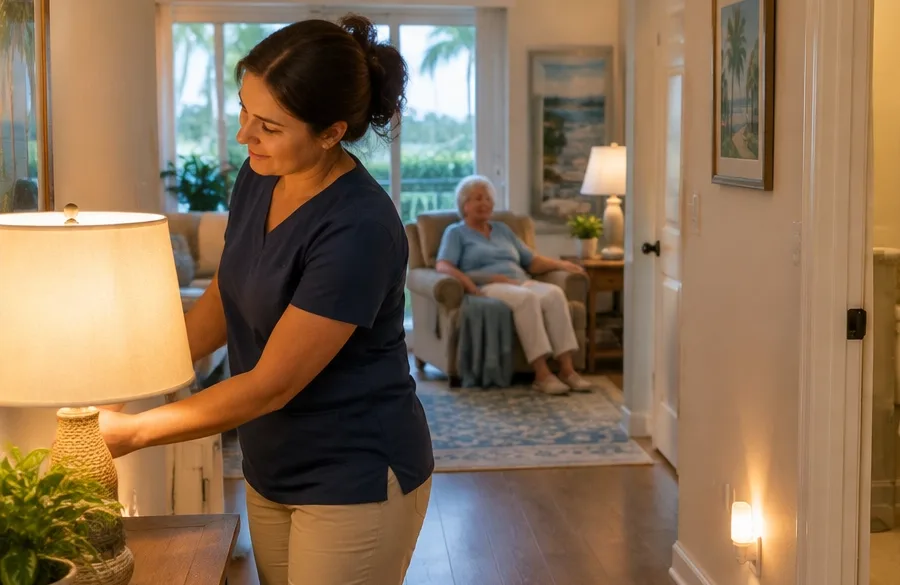
- Turn on lamps before the sun sets.
- Use nightlights in hallways, bathrooms, and bedrooms.
- Keep stairways well lit.
- Close curtains to reduce reflections and confusing shadows.
- Check that bulbs are bright enough without creating glare.
Clear common walking paths
- Remove loose rugs and electrical cords.
- Keep shoes, bags, and clutter off the floor.
- Move small tables or decorations away from narrow hallways.
- Place frequently used items within easy reach.
- Add contrasting tape or color markers to steps if appropriate.
Plan for wandering
If your loved one tries to leave, consider:
- Door chimes or alerts
- Secured storage for car keys
- A current photo and emergency contact information
- Simple signs or pictures for the bathroom and bedroom
- A trusted neighbor who knows how to reach you
Do not use physical restraints. They can increase fear and the risk of injury. If your loved one is in immediate danger, call 911.
Keep a Simple Sundowning Log
A short daily log can reveal patterns. Record:
- When agitation starts and ends
- What happened during the previous hour
- Food, drinks, naps, and activities
- Medication times
- Bathroom visits
- Signs of pain or illness
- Noise, visitors, weather, or changes at home
For example, you may notice that sundowning is worse after a long drive across Tampa, after skipping lunch, or when a thunderstorm darkens the home. Share the log with your loved one’s physician or care team.
A sudden or severe change in behavior should receive medical attention. Contact the healthcare provider if agitation is new, persistent, associated with a fall, or accompanied by fever, pain, weakness, hallucinations, or major confusion. A urinary tract infection, medication reaction, dehydration, or another medical issue may be involved.
When Is Professional Dementia Care a Good Idea?
Family support is valuable, but you do not have to manage every evening alone. Professional dementia care may be helpful when:
- Sundowning happens most days.
- Your loved one needs help with bathing, dressing, toileting, or mobility.
- You are worried about falls or wandering.
- Evening care is affecting your sleep or work.
- Your loved one becomes unsafe when left alone.
- Family members disagree about the best care plan.
- You need dependable coverage while another caregiver rests.
CareBuilders at Home provides customized support for families throughout Tampa, including Davis Island and Lake Magdalene. Our specialized dementia care can include meaningful engagement, mobility support, meal preparation, medication reminders, personal hygiene assistance, and a consistent late-day routine.
Personal Care Services can help with bathing, dressing, toileting, grooming, mobility, and other daily needs. Companion Care can bring conversation, hobbies, meal support, light housekeeping, errands, and a reassuring presence during the hours when your loved one feels most unsettled.
Families may also use flexible Respite Care when a family caregiver needs time to work, sleep, attend an appointment, or simply recharge. When supervision is needed day and night, 24-Hour Home Care provides a dependable, continuous presence at home.

Support for Families During Alzheimer’s Awareness Month
Alzheimer’s Disease Awareness Month is a reminder that dementia care involves more than memory support. Your loved one’s comfort, dignity, independence, relationships, and emotional well-being matter, too.
Start with one small change:
- Turn on the lights earlier.
- Move demanding activities to the morning.
- Offer a familiar snack before agitation begins.
- Keep a record of patterns.
- Ask another family member to share the evening routine.
- Schedule a professional care consultation before a crisis develops.
If you have been searching for “dementia care hillsborough county” or “alzheimer’s care hillsborough county,” you deserve clear answers and a care plan built around your loved one’s home, preferences, and daily rhythm.
CareBuilders at Home is here to help you explore practical options with confidence. Visit our Contact Us page to request information or call 813-336-6033. A thoughtful plan can make dusk feel less stressful: and help your loved one continue aging with comfort and dignity at home.