
As parents age, many adult children find themselves asking a difficult question: “How do I know if my mom or dad needs help at home?”
While safety concerns, medication management, and personal care needs often receive the most attention, there is another factor that can have a profound impact on a senior’s well-being: social connection.
Many older adults spend long hours alone, especially after the loss of a spouse, retirement, or changes in mobility that make it difficult to leave home. Even when family members call regularly or visit whenever possible, busy schedules and distance can make consistent companionship challenging. That’s where companion care at home can make a meaningful difference.
Companion care focuses on providing social interaction, emotional support, and engagement for seniors who may be experiencing loneliness or isolation. More than simply having someone present, companion care helps older adults maintain a sense of connection, purpose, and enjoyment in daily life.
Why Social Connection Is Essential for Seniors
Research continues to show that loneliness can affect more than just a person’s mood. Chronic social isolation has been linked to increased risks of:
- Depression and anxiety
- High blood pressure and heart disease
- Cognitive decline and memory loss
- Reduced physical activity
- Poor overall health outcomes
For many seniors, the transition from a busy, independent life to spending much of the day alone can be emotionally difficult. Regular companionship helps fill that gap by providing meaningful conversation, shared experiences, and opportunities for engagement.
For adult children, companion care can also provide peace of mind, knowing that someone is regularly checking in and helping their loved one stay connected to the world around them.
What Does Companion Care Include?
Companion care is centered on building relationships and encouraging participation in activities that support emotional and cognitive well-being. Every senior has unique interests, and companionship services can be tailored to match those preferences.
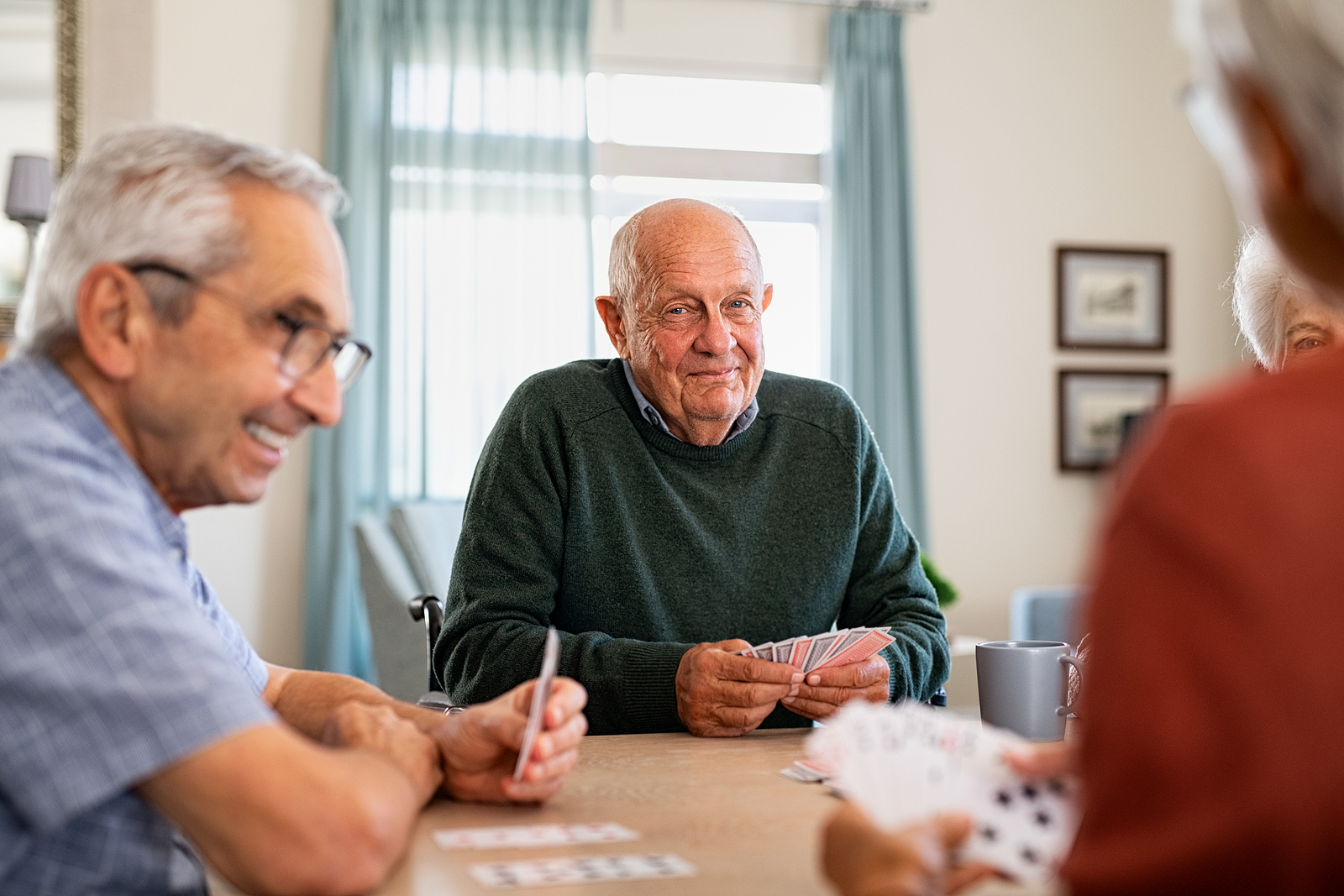
Playing Games Together
Games offer an enjoyable way to stimulate the mind while creating opportunities for conversation and laughter.
A companion might play:
- Card games
- Board games
- Dominoes
- Checkers
- Bingo
- Word and trivia games
These activities encourage social interaction while helping seniors exercise memory, concentration, and problem-solving skills. Just as importantly, they create moments of fun and connection that many older adults miss when living alone.
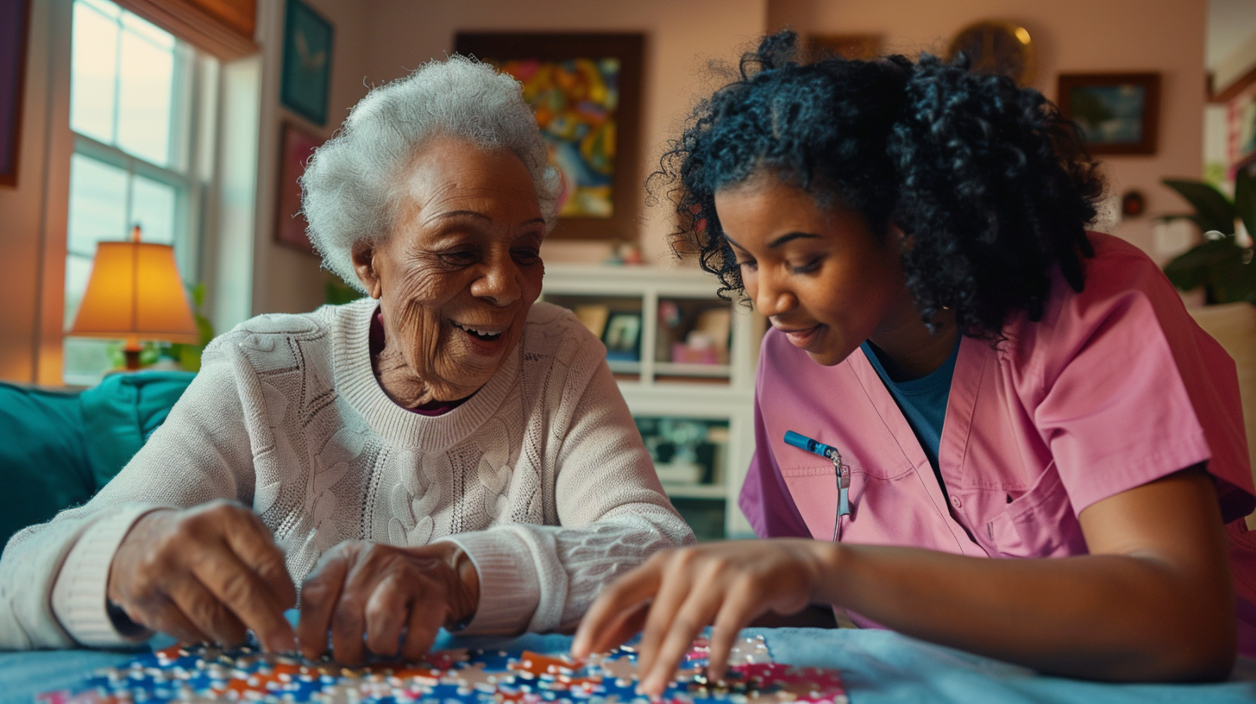
Working on Puzzles
Puzzles provide both relaxation and mental stimulation. Whether it’s a large jigsaw puzzle spread across the dining room table or a daily crossword puzzle, working together can be a rewarding experience.
Companions may help seniors with:
- Jigsaw puzzles
- Crossword puzzles
- Word searches
- Sudoku
- Brain teasers
Completing a puzzle offers a sense of accomplishment while encouraging conversation and teamwork. These activities can also help support cognitive health and keep the mind actively engaged.
Encouraging Creativity Through Crafts
Creative activities provide opportunities for self-expression while helping seniors stay mentally and emotionally engaged.
Depending on their interests, a companion may participate in activities such as:
- Coloring
- Painting
- Scrapbooking
- Knitting or crocheting
- Making greeting cards
- Seasonal crafts
Many seniors find additional purpose in creating items for charitable organizations, such as blankets for newborns, comfort items for shelters, or handmade gifts for community programs. These projects can foster a sense of contribution and fulfillment.
Reading and Discussing Favorite Topics
For seniors who enjoy reading, sharing books, magazines, or newspapers can spark engaging conversations and help keep them informed about the world around them.
A companion might:
- Read aloud when vision challenges make reading difficult
- Discuss current events
- Share interesting articles
- Explore favorite books and authors
- Talk about hobbies and personal interests
These discussions encourage critical thinking and help seniors maintain a sense of connection to topics they care about.
Sharing Meals and Conversation
Some of the most meaningful moments happen around the table.
Eating alone day after day can make mealtimes feel routine and isolating. Sharing a meal with a companion provides an opportunity for conversation, connection, and emotional support.
Discussions may include:
- Family memories
- Favorite traditions
- Hobbies and interests
- Travel experiences
- Current events
- Upcoming plans and celebrations
These simple interactions can brighten a senior’s day and help reduce feelings of loneliness.
Enjoying Music Together
Music has a unique ability to evoke memories and emotions. Hearing favorite songs from earlier decades often sparks stories and conversations that might not emerge otherwise.
A companion can:
- Listen to favorite artists or genres
- Create personalized playlists
- Sing along to familiar songs
- Discuss meaningful life events connected to music
Music-based activities can be especially beneficial for seniors living with memory challenges, as familiar melodies often remain meaningful even when other memories become difficult to access.
Spending Time Outdoors
Fresh air and a change of scenery can have a positive impact on both physical and emotional well-being.
When appropriate, a companion may help a senior enjoy:
- Sitting on a porch or patio
- Walking in the yard
- Gardening
- Bird watching
- Visiting a nearby park
Even a short period outdoors can boost mood, reduce stress, and provide a welcome break from spending the day inside.
More Than Assistance—A Meaningful Relationship
Companion care at home is about more than filling time. It provides older adults with something many families cannot always provide consistently due to work, distance, or other responsibilities: regular, dedicated companionship.
For adult children, recognizing that a parent is lonely can be heartbreaking. Companion care offers a practical and compassionate solution by helping seniors maintain social connections, stay mentally engaged, and continue enjoying the activities that bring meaning to their lives.
While companion care does not replace the love and involvement of family, it can become an important part of a support system that helps aging adults remain happier, healthier, and more connected while continuing to live comfortably at home.
If you or an aging loved one is considering companion care at home in Woodbury, MN, and the surrounding areas, please contact the friendly staff at CareBuilders at Home Minnesota. Call today 612-260-2273.